Category: Leadership & Change

Thought leadership for leaders navigating uncertainty

  • Embracing Changes: A Journey of Transformation

    I recently became a grandmother! It made me reflect on how these changes impact on us and change us forever.

    Life doesn’t usually announce its biggest changes with a drumroll. More often, they arrive quietly—wrapped in a moment, a title, or a responsibility you didn’t fully understand until you were already living it. Becoming a mother or father. A grandmother or grandfather. A caregiver. A partner. A leader. Each role reshapes not only how the world sees us, but how we see ourselves.

    These transitions are profound because they are not just additions to our lives; they are redefinitions.

    The Mirror Shifts

    Before a major life change, identity often feels singular and self-directed. I am me. My time, my energy, my choices orbit largely around my own needs and ambitions. Then something shifts. Suddenly, there is another life—sometimes several—woven into your own.

    For new parents, the mirror changes overnight. You may still recognise your face, but the person looking back carries a new weight of responsibility. There is love deeper than anything you imagined, paired with fear just as intense. You might feel stronger than ever—and simultaneously more vulnerable.

    For grandparents, the reflection can be gentler but no less complex. There is pride, legacy, and joy in watching life continue. But there can also be a quiet reckoning with time passing, with roles evolving from centre stage to the wings. Wisdom grows, but so can nostalgia—and sometimes grief for versions of yourself that feel further away.

    The Positive: Expansion, Purpose, Depth

    One of the greatest gifts of role change is expansion. Life grows bigger.

    You discover reserves of patience you didn’t know you had. You learn to advocate, to protect, to prioritise differently. Many people describe a clearer sense of purpose after becoming parents or grandparents—a grounding force that cuts through trivial worries and sharpens what truly matters.

    Empathy deepens. Your capacity to love stretches. Success becomes less about personal milestones and more about the wellbeing, growth, and happiness of others. There is profound meaning in that shift—one that often brings humility and perspective.

    The Negative: Loss, Conflict, and Quiet Guilt

    Yet it would be dishonest to pretend that these transitions are only uplifting.

    With new roles often comes loss. Loss of freedom. Loss of time. Loss of spontaneity. Sometimes, loss of identity as you knew it. You may grieve the person you were before, even while loving the life you have now.

    There can be internal conflict—especially when society’s expectations clash with your lived reality. Parents may feel pressure to be endlessly patient, fulfilled, and grateful, leaving little room to admit exhaustion or resentment. Grandparents may feel invisible at times, unsure of where they fit in a world that seems to move faster each year.

    Guilt is a frequent companion. Guilt for wanting space. Guilt for missing the “old you.” Guilt for not loving every moment as much as you think you should.

    These feelings don’t mean you are failing at your role. They mean you are human.

    Integration, Not Erasure

    Perhaps the most important reflection is this: life changes do not require you to erase who you were. They invite you to integrate.

    You are not only a mother or father—you are still an individual with dreams, flaws, and a story of your own. You are not “just” a grandmother or grandfather—you are a keeper of history, perspective, and quiet strength. Each role adds a layer; it does not replace the core.

    Growth happens when we allow ourselves to hold both truths: gratitude and grief, joy and frustration, pride and doubt.

    Becoming, Again and Again

    Life will continue to ask us to step into new roles. Each time, we will lose something—and gain something else. The challenge is not to cling to who we were, nor to disappear into who we are becoming, but to honour the full arc of ourselves.

    In every transition, there is an invitation: to be softer, wiser, braver. To let identity remain fluid. To understand that change doesn’t mean you are less—it often means you are more.

    And perhaps that is the quiet triumph of life’s role changes: they teach us that becoming is not a single moment, but a lifelong practice.


  • Stop Wishing, Start Working: Unlocking Potential

    Swimmer

    Some of the most powerful truths come from unexpected places — like a 13-year-old boy reminding us that wishes don’t win races.

    There’s a quote I first heard from my son when he was only thirteen, standing proudly at a school swimming gala as captain — a child-sized leader with more courage than biceps. He cleared his throat, looked out at a crowd of teenagers who only cared about snacks, and delivered a line I’ve repeated ever since:
    “Working will win when wishing won’t.”

    Not bad for someone whose biggest responsibility at the time was keeping track of his goggles.

    I’m still not sure who originally said it, but it pairs beautifully with Gary Player’s classic:
    “The harder I train, the luckier I get.”

    Two quotes. Same truth.
    Dreams are free. Results are not.

    We all have dreams — the home we imagine, the business we want to grow, the lifestyle that plays in our mind like a movie trailer. Some people reach those dreams. Others don’t. Some call it luck. Others call it privilege. And yes, luck and privilege exist. But most of the time? The difference isn’t luck. It’s discipline. It’s the daily, often boring, sometimes inconvenient choices that no one claps for.

    And here’s the part people forget: it doesn’t matter what the dream is.
    Your goals don’t need to impress anyone. They don’t have to compete with your neighbour, your colleague, your cousin, or Mrs Jones — who, by the way, is probably miserable trying to maintain the façade that she has it all together. Let her run her race. You focus on yours.

    Your goal might be running a marathon, writing a book, saving for a deposit, building a business, drinking more water, or simply getting through a week without wanting to hide under your desk. All valid. All yours.

    But owning the dream means owning the discipline that builds it.

    Two people can have the same goal, the same challenge, the same 24 hours… yet end up in completely different places. One wakes up early because they promised themselves they would. The other hits snooze because “sleep is also self-care.” One chooses a healthy meal. The other chooses the chocolate because “life is short.” One studies. The other scrolls. One trains in the cold. The other waits for “motivation,” which is usually late, unreliable, and impossible to contact.

    The difference isn’t dramatic. It’s subtle.
    Tiny choices, repeated consistently, stack up like compound interest.

    We all get the same 525,600 minutes a year. Some invest them. Some spend them carelessly. Some lose them like loose change. And some complain they never have enough time — usually right after a three-hour TikTok spiral.

    It’s easy to blame external factors. The economy. South Africa. Your competition. Loadshedding. The price of petrol. The fact that Mercury might be in retrograde (again). Excuses are endless and incredibly comforting. But excuses don’t move us forward. They just make us feel better about staying still.

    At some point, we all need to hold up the mirror — the honest one, not the Instagram filter. Because if we aren’t where we want to be, the world may not be the villain we think it is. Sometimes the biggest obstacle is the person in the mirror who keeps postponing their own potential.

    The good news?
    If part of the problem is us, then the power to change the outcome is also us.

    The path is simple — not easy, but simple:
    Decide what you want.
    Make a plan.
    Do the work, especially on the days when you’d rather run away to a small island with good Wi-Fi and no responsibilities.
    Adjust when needed.
    Repeat far more times than feels fair.

    And please, stop comparing your progress to Mrs Jones. She doesn’t have your goals, your responsibilities, your strengths, your challenges or your life. Half the time she doesn’t even want the life she’s pretending to have.

    Working will win when wishing won’t — not because wishing is wrong, but because wishing is passive and working is powerful. The dream matters. But the discipline?
    That’s the difference.

    If it is to be, it is truly up to me.

    We all get 525,600 minutes a year. What we do with them separates achievement from excuses.

  • Why Listening Beats Selling: Unlocking Client Needs

    Whalebone pier

    The magic happens when you stop selling and start listening.

    There’s a universal truth in sales that almost nobody tells you upfront: the more you try to sell to someone, the less they want to buy. It sounds ridiculous, I know. We spend so much time learning how to talk about what we offer, how to present it, how to explain it, how to wow the client with our encyclopaedic product knowledge — only to discover that clients aren’t actually longing for a 40-minute verbal tour of our brilliance. They simply want to feel understood, not cornered.

    Most salespeople start out believing that success is directly proportional to the number of words they can get out before the client escapes. They rehearse pitches in the car. They practise enthusiasm in the mirror. They enter meetings ready to deliver a performance so powerful it could win an award, if only the client cared even remotely about their monologue.

    But the client didn’t show up for a lecture. She showed up for a solution. And nothing shuts down a client faster than being trapped under an avalanche of features she never asked about.

    This is the part where sales becomes humbling — and a little funny — because the strategy that actually works is the exact opposite of what most people do. Instead of talking more, you should talk far less. Instead of delivering polished speeches, you should ask curious questions. Instead of showcasing your brilliance, you should focus on hers. Instead of selling to her, you should let her buy.

    And yes — it really is that simple.

    People don’t buy products. They buy feelings. No one buys a mattress; they buy the promise of waking up without plotting the murder of the springs. No one buys a cold drink; they buy the moment their thirst finally lifts its hands and surrenders. And absolutely no one buys a property for the aluminium window frames. They buy the life they can picture themselves living inside those walls — the safety, the comfort, the status, the convenience, the fresh start, or the sheer relief of knowing the neighbour’s entertainment system won’t be shaking their headboard at midnight.

    Yet here we are, still watching salespeople passionately describe the mattress while the client is trying to figure out whether they’ll ever sleep properly again. It’s like explaining the chemical composition of water to someone dying of thirst. Helpful in theory. Completely useless in the moment.

    And it all stems from one mistake: believing the client cares about your story. She doesn’t. It’s not personal — she’s simply busy living her own story, the one where she is the main character, the director, the producer, the editor and the entire audience. Your job is not to audition for a starring role. Your job is to be the calm, thoughtful supporting character who understands enough about her plot to help her get the ending she wants.

    This is where questions become your superpower. Not manipulative questions. Not those cringeworthy sales questions you find in outdated training manuals. Real questions. Human questions. Questions that make the client feel like she’s in a conversation, not an ambush.

    The funniest part? Clients will happily tell you everything you need to know to close the deal — if you give them space to. When you ask someone what they’re hoping for, what hasn’t worked before, what brought them to this point, or what a successful outcome would feel like, they’ll open up without you having to pry. And when someone opens up, they accidentally give you the blueprint for exactly how to help them buy.

    But when you talk too much, two things happen instantly. First, the client stops listening. You can usually see the moment it happens — the eyes glaze over, the polite smile freezes, and she begins mentally planning her escape route. Second, she begins resisting. People instinctively push back against anything that feels like pressure. If you insist, she hesitates. If you overwhelm, she withdraws. If you dominate the conversation, she shuts down.

    However, if you listen — truly listen — something almost magical happens. The client relaxes. Her guard lowers. She starts speaking freely instead of cautiously. She begins trusting you because you’ve shown you’re actually paying attention rather than waiting for your turn to impress her. And when she trusts you, the need to “sell” evaporates. She begins guiding herself toward the decision that aligns with what she’s told you she values.

    This is why selling based purely on features is such a tragic waste of breath. Features belong in brochures. Benefits belong in conversation. But the real driver of a buying decision is neither the feature nor the benefit — it’s the need behind the benefit. And you cannot uncover that without curiosity.

    When you ask the right questions, the client tells you what the mattress means to her. Maybe it’s rest. Maybe it’s comfort. Maybe it’s relief after years of back pain. When you ask, she tells you what the cold drink represents. Maybe it’s refreshment. Maybe it’s energy. Maybe it’s nostalgia. When you ask, she tells you what the property symbolises. Maybe it’s safety. Maybe it’s independence. Maybe it’s success. Maybe it’s freedom from the apartment where the upstairs neighbour believes he is a part-time tap dancer.

    And once you understand her reason, your job becomes embarrassingly easy. You simply show her how the thing you’re offering gives her the feeling she’s looking for. That’s it. No theatrics. No desperate pitches. No heavy breathing. No need to become a walking brochure.

    The irony is that when you finally stop trying to sell, the client becomes far more willing to buy. Because nobody wants to be convinced — but everyone wants to feel understood.

    At the end of the day, the sale doesn’t happen because you dazzled her with your expertise. It happens because she recognised herself in the solution. It happens because the conversation became about her, not you. It happens because you stopped talking long enough to hear what she actually needed.

    So talk less. Ask more. Forget the mattress. Sell the sleep. Forget the drink. Sell the refreshment. Forget your story. Learn hers. And let the client buy — the exact thing she told you she wanted all along.

  • Transform Conversations: The Power of Transactional Analysis

    Opening the gate

    You don’t just manage the conversation. You grow the person.

    Every now and then, you stumble upon a psychological model that doesn’t just make sense — it changes your entire approach to people, communication, conflict, leadership, and even the voices in your own head.

    For me, Transactional Analysis did exactly that.

    Developed in the late 1950s by Dr. Eric Berne, this deceptively simple framework has guided boardrooms, therapy rooms, classrooms, marriages, and more recently — my own conversations with colleagues, clients, family members, and the occasional fully grown adult behaving like a toddler in an inversion table of emotions.

    You know the ones.

    The beauty of Transactional Analysis, or TA, is that it offers a way to understand why people speak the way they do and how you can shift the tone of any interaction from power struggle or sulking to calm, constructive, adult-level problem-solving.

    It gives you a way to manage conversations without manipulation, manage yourself without meltdown, and manage others without turning into a condescending schoolteacher.
    (Unless, of course, they’re acting like a child. In which case: we’ll get to that.)

    Let’s break it down — simply, practically, and with a few curveballs along the way.

    The Three Modes We All Switch Between

    TA says we all communicate from one of three Ego States:

    1. Parent
    2. Adult
    3. Child

    These aren’t roles, ages, or diagnoses.
    They’re states — temporary lenses you slip into depending on stress, habit, or the emotional landscape of the moment.

    And just like that, interactions become predictable patterns.

    1. The Parent State

    This can come in two flavours:

    • Critical Parent:
      “Why didn’t you do this properly?”
      “I told you how to do this.”
      “You never listen.”

    Tone: sharp, instructive, superior, bossy, sometimes unintentionally belittling.

    • Nurturing Parent:
      “Don’t worry, I’ll handle it.”
      “Shame, let me fix it for you.”

    Tone: warm but potentially smothering; often creates dependency.

    2. The Child State

    Also two flavours:

    • Compliant/Dependent Child:
      “Okay… whatever you say.”
      “I can’t do this.”
      “Please just help me.”

    Tone: helpless, avoidant, overly obedient, seeks approval or rescue.

    • Rebellious Child:
      “Don’t tell me what to do.”
      “This is stupid.”
      Door-slamming optional.

    Tone: defensive, emotional, dramatic, often irrational.

    3. The Adult State

    Now we’re talking.

    • Logical
    • Calm
    • Solution-focused
    • Present
    • Curious rather than reactive

    This is the state you want to be in for 95% of your professional life… and at least 70% of your personal life if you’d like to stay happily married.

    Adult-adult communication is where clarity, problem-solving, and mutual respect live.

    Why Conversations Go Wrong

    Most conflicts don’t happen because people are bad, dramatic, or difficult.
    They happen because:

    Someone slips into Parent → The other drops into Child
    or
    Someone slips into Child → The other rises into Parent

    You get a seesaw of power and emotion.

    And suddenly…
    the fully grown adult across from you is pouting, lashing out, or waiting to be rescued, and you — despite your best intentions — have turned into their mother, teacher, or headmistress.

    No wonder conversations spiral.

    The Magic of TA: You Can Shift Any Conversation

    The real power of Transactional Analysis lies in this truth:

    You can pull any interaction back into the Adult state — simply by going there first.

    Let’s say a manager storms in:

    Critical Parent Mode:
    “This report is all wrong! Why didn’t you follow instructions?”

    Your instinct might be:

    • Child: “I tried my best… sorry.”
    • Parent: “Well maybe your instructions weren’t clear!”

    Both will escalate.

    But if you slip into Adult, calmly and intentionally, you change the game:

    Adult:
    “Thanks for the feedback. Let’s look at it together and see where the misunderstanding happened.”

    Instant shift.
    His emotional temperature drops because you’re not feeding the fire.

    Or—
    A colleague arrives in helpless Child mode:

    “I can’t do this. It’s too hard. I never understand what they want.”

    Your instinct might be to go Parent:

    “Okay, let me show you. Again.”

    But this reinforces dependency.
    It keeps them small, emotional, and reliant on you.

    Instead:

    Adult:
    “Let’s break it down together. What’s the first step that makes sense to you?”

    Suddenly they’re standing with you, not below you.
    You’re co-adults — competent, capable, engaged.

    The tone shifts.
    The energy shifts.
    The power dynamic shifts.

    TA in Real Life: How to Transform the People Around You

    This is where things get juicy.

    One of the gifts of TA is that you can help someone move from bratty or helpless Child mode into confident, empowered Adult mode.

    Not by lecturing.
    Not by scolding.
    Not by rescuing.

    But by holding the space as an Adult yourself.

    Some examples:

    When a client throws a tantrum:

    “They never fixed this properly! This is ridiculous!”

    You:
    “Let’s go through it step by step and see how we can resolve it.”

    When an agent gets defensive:

    “That’s not my fault! Nobody told me!”

    You:
    “Let’s figure out what information was missing and how we can prevent that next time.”

    When a contractor acts helpless:

    “I don’t know what else you expect me to do.”

    You:
    “What are the possible solutions from here?”

    When a friend needs rescuing:

    “What must I do? Tell me!”

    You:
    “What options do you see?”

    Every Adult-state question is a ladder.
    People can climb out of their emotional ditch and stand with you — equal, responsible, clear-minded.

    It’s one of the most quietly powerful leadership tools you will ever use.

    Using TA on Yourself

    Perhaps the biggest secret of TA is this:

    You don’t just have Parent/Adult/Child conversations with others…
    You have them with yourself.

    • “You’re not good enough.” (Critical Parent)
    • “Someone else should fix this for me.” (Child)
    • “Let’s think this through rationally.” (Adult)

    Your internal state determines your external tone.

    If you want your conversations to change, your inner dialogue must change first.

    To settle your own inner Child:
    “You’re scared. That’s okay. Let’s take a breath.”

    To dim your inner Critical Parent:
    “Perfection isn’t the goal. Progress is.”

    To strengthen your Adult:
    “What’s the next logical step?”

    Adult is not emotionless.
    It’s responsible, steady, and clear.

    And people respond to that energy instantly.

    The Ultimate Goal: Co-Adult Relationships

    Whether you’re leading a team, raising teenagers, managing clients, or navigating family dynamics, TA gives you the power to:

    • calm chaos
    • de-escalate conflict
    • dissolve defences
    • reduce drama
    • empower people
    • keep conversations productive
    • maintain dignity and respect on both sides

    The goal isn’t dominance or obedience.
    It’s partnership.

    Two adults standing side by side, solving the world (or at least the current problem) together.

    That’s where relationships thrive.
    That’s where confidence grows.
    That’s where trust is built.

    And — perhaps most beautifully — that’s where you help people step out of dependent, dramatic, childlike patterns and into their own strength.

    You don’t just manage the conversation.
    You grow the person.

    And that is leadership.

    Two adults standing side by side can solve almost anything.

  • Company Culture: Beyond the Candy Floss Illusion

    Candyfloss

    Candy floss looks magical… until you realise it’s just colourful air. Some company cultures are exactly the same. If your company culture tastes sweet at first but leaves you dizzy, sticky, and slightly nauseous… congratulations, you’ve joined the Candy Floss Club.

    There’s something magical about candy floss at a funfair. It’s fluffy, colourful, irresistible, and somehow manages to make us feel both six years old and on top of the world. Joining a new company often feels exactly the same. You take one look at the gorgeous colours swirling in the air — the branding, the smiles, the onboarding presentations, the inspirational slogans printed on coffee mugs — and you think, Wow. I have hit the jackpot. Everything smells amazing, tastes incredible, and shines with the kind of promise that feels almost unbelievable. For a moment, you genuinely wonder why the universe waited this long to bless you.

    That’s the thing about candy floss — and company culture. The first taste is always spectacular.

    But here’s the uncomfortable truth no one warns you about: the more of it you have, the more you start to feel slightly ill. Not dramatically ill. Not “call an ambulance, I regret everything” ill. Just that subtle, nagging sense that maybe — just maybe — sugar alone is not enough to live on. After a few fluffy bites, you realise it’s all the same sweetness, no matter how gorgeous the colour. Pink? Blue? Neon green? Surprise rainbow swirl? It doesn’t matter. It all melts down to the same sticky, overly familiar sameness.

    And culture can be like that too.

    When you first join a company, everything feels enchanting. The values sparkle. The vision inspires. The team WhatsApp group feels like a lively party you’re finally invited to. But as time passes, you begin to notice whether the culture actually has substance… or whether it’s just spun sugar. Beautiful to look at. Fun for a moment. But ultimately offering no nourishment, no depth, and no staying power.

    The thing about candy floss is that it looks enormous — like a cloud you could live inside — but once you take a bite, it shrinks into nothing. Some company cultures work the same way. They appear grand, overflowing with promise, but when you really taste them, they offer little more than air and hyperactivity. Busy calendars instead of meaningful contribution. Inspirational posters instead of genuine purpose. Team-building exercises instead of real trust. A rainbow of colours hiding a single, unchanging flavour.

    And if you leave candy floss out in the air long enough? It collapses into a sad, hardened clump that nobody wants and has to be thrown away. Corporate cultures that rely exclusively on hype, sparkle, and branding eventually do the same. They harden. They become rigid. Innovation dries up. Morale stiffens. People stop showing up fully, because nothing new is allowed to grow. A culture that once felt vibrant becomes a sticky lump of nostalgia, repetition, and “this is just the way we do things.”

    The secret to a thriving workplace isn’t avoiding candy floss — it’s refusing to only eat candy floss.

    A great company doesn’t remove the magic. It doesn’t suck out the fun. It doesn’t replace the bright colours with beige walls and passive-aggressive memos. A great company keeps the candy floss — the excitement, the novelty, the sparkle — but also lets you try the rest of the funfair. It understands that no human being can thrive on sweetness alone. It offers substance, nourishment, variety, and space to wander.

    Think of it like this:

    A good company lets you have the candy floss.
    A great company lets you choose your flavours.
    An extraordinary company lets you wander through the entire funfair and decide which rides matter for your life and your career.

    You can hop onto the rollercoaster of growth when you feel bold.
    Stroll into the hall of mirrors and confront your blind spots when you’re ready.
    Grab popcorn for slow seasons.
    Hold onto the carousel pole when everything feels overwhelming and you just need something steady.
    And — most importantly — step out of the gates and go home to your family before returning the next day with fresh eyes and a fresh spirit.

    A healthy culture doesn’t demand that you stay in the funfair until closing time, dizzy and sugar-drunk. It knows when to let you rest. It knows life exists outside the gates. It respects that you are a person, not a performer.

    Effective cultures are not made of big gestures or cotton-candy promises. They are built on substance — trust, autonomy, flexibility, kindness, clarity, and the freedom to grow in the direction that feels right for you. They give you space to choose your path, pick your experiences, develop your strengths, and live your life without guilt.

    So when you’re choosing a workplace, don’t just look for the bright sugar swirl that dazzles you at first glance. Look for what happens after the sweetness wears off. Look for the leadership that nourishes. Look for the team that supports growth. Look for the freedom to explore, the wisdom to rest, and the opportunity to taste more than one flavour. Look for the places that don’t just hand you candy floss — they hand you the map to the funfair.

    Because the truth is simple:
    Candy floss is wonderful… but no one thrives on sugar alone.
    Find the culture that feeds your spirit, not just your senses.
    Find the place that lets you be whole.

    And when you do?
    You’ll keep coming back — not for the colours, but for the substance.

  • Leadership Traits That Inspire Others

    Unseen leaders

    Leadership isn’t about titles, corner offices, or how loudly you can speak in a meeting. It’s about who you are when no one’s watching — and how you show up for others when things get hard.

    As leaders, we’re not looking for perfection. We’re looking for potential — and the character that turns it into something remarkable.

    What We Do Look For

    We look for initiative — the person who doesn’t wait for a memo to tell them what’s obvious. They see what needs doing and just get on with it. Bonus points if they do it without sighing loudly first.

    We look for innovation — not the kind that involves writing “THINK OUTSIDE THE BOX” on a whiteboard, but the real kind — the one that finds new, better, smarter ways of doing things when the box is already on fire.

    And we look for independence — the person who quietly gets things done while everyone else is still forming a committee about it. The one who can be trusted to handle it, fix it, or find a way through it — all without a daily pep talk.

    Over and above this, they do an excellent job. They deliver unquestionable results in their area of expertise and others look up to them. They are an inspiration. A great example.

    They buy into the vision and live the values. They help others see the vision and live the values.

    These are the seeds of real leadership. They don’t always grow fast, but when they do, they change everything.

    What We Don’t Look For

    We don’t look for the team snitch — you know, the self-appointed “reporting channel” who mistakes gossip for initiative.
    If you spend more time narrating other people’s shortcomings than improving your own, spoiler alert: that’s not leadership.

    We don’t look for arrogance disguised as ambition. The “I’m not bossy, I just have better ideas than everyone” type. Confidence is great — but humility looks better on everyone.

    And we definitely don’t look for the person who steps on others to be seen. You can’t claim to be a leader when your team needs a first aid kit after every meeting.

    The Humble Kind of Leadership

    The best leaders are the ones who make others feel capable, valued, and seen. They don’t steal the spotlight; they share it. They celebrate the quiet wins, support their team through the storms, and never forget that leadership is a privilege — not a power play.

    True leadership is humble, human, and deeply supportive. It’s less about control and more about contribution.

    The Curveball

    If you want to lead, start by helping others succeed. Be the calm in the chaos, the voice of reason in the WhatsApp group, and the person who notices effort — not just errors.

    Because true leaders don’t create followers; they create more leaders. And if you can do that with a bit of humility, humour, and heart — you’re already halfway there.

  • From Cricket to Business: The Importance of Team Mindset

    Protea South Africa national Flower

    So close. The South African Women’s Cricket team — our incredible Proteas — made it all the way to the World Cup final. The skill? Undeniable. The discipline? Evident. The teamwork? Beautifully on display. They ticked every box on the “how to win” checklist.

    And yet… they didn’t.

    So what happened?

    Let’s unpack this over a cup of coffee.

    Skill, Discipline, Teamwork – and Belief

    To win anything — a match, a deal, or even just the week — you need a combination of skill, discipline, teamwork, and belief. The Proteas had the first three nailed. You don’t get to a World Cup final without mastering those.

    But belief — real, deep, goosebump-inducing belief — might have been the missing ingredient.

    Their captain said the team was focused on taking “one game at a time.” Sensible? Absolutely. But did you ever hear them say, “We’re bringing the cup home”? Not quite. Compare that to the Springboks — a team that somehow makes you believe they’ll pull off the impossible… even when they’re trailing by 10 points with two minutes to go.

    Is that belief a coaching thing? A mindset thing? A culture thing? Probably a bit of all three.

    Medals vs Mindset

    Here’s the hard truth: if you’re happy to get a medal — any medal — you’ll always lose. You might not even make the final. Winners don’t play for bronze or silver; they play to win.

    You have to want it so badly you can taste it — like candyfloss at a funfair, sweet and irresistible. That kind of hunger gives you the energy to dig deep, to stay in the nets when everyone else has gone home, to deliver exceptional results no matter what’s needed. That’s the difference between participating and owning the moment.

    When One Player Drops the Ball

    In any team — sports or workplace — the magic only works when everyone pitches up on the day. One person off their game can shift the whole dynamic. Two crucial dropped catches and a duck from a key player might have cost the Proteas that final.

    It’s not about blame — it’s reality. In the workplace, one “off day” from a key team member can derail a project, a pitch, or a deal. That’s why preparation, mindset, and mutual belief matter just as much as technical skill. The chain really is only as strong as its weakest link.

    Back in the Office

    So how does this play out in our world of coffee cups and client calls?

    • Skill is your knowledge and expertise. Keep learning, stay sharp.
    • Discipline is your daily grind — the calls you make, the reports you finish, the consistency that builds credibility.
    • Teamwork is what keeps the wheels turning when things get tough.
    • Belief is the secret sauce. The quiet confidence that says, “We’ve got this.”

    If your team believes — really believes — that they can hit their targets, close the deal, or turn a challenge into a win, magic happens.

    And if not? Well… sometimes, like the Proteas, you play a beautiful game and fall just short. But the lesson is never wasted — because next time, you walk onto that field (or into that boardroom) not just hoping to win, but knowing you can.

  • Don’t Keep Rotten Apples: Leadership Insights for Hiring

    Don’t Keep Rotten Apples: Leadership Insights for Hiring

    Because coffee is essential for survival, culture makes or breaks a business, and life… well, life always throws a few curveballs.

    There’s a reason the phrase “one bad apple spoils the bunch” has survived for centuries. It’s not just something your grandmother muttered while glaring at your teenage friends — it’s also one of the most brutally accurate business lessons you’ll ever learn.

    Because here’s the truth: one wrong hire can unravel everything. The wrong person in your team doesn’t just slow things down. They don’t just cause a little drama. They rot. Slowly, subtly, but inevitably. And once the rot sets in, it spreads.

    The mistake leaders often make is thinking they can manage the apple into ripening. They polish it, they reframe it, they even try putting it next to fresher apples hoping the good ones will rub off. Spoiler: it doesn’t work. A rotten apple doesn’t become fresh — it just takes the rest down with it.

    Keeping the wrong hire feels easier than dealing with it. You tell yourself their skills outweigh their attitude. You hope they’ll “come around.” You convince yourself that one person can’t possibly influence the entire culture. (They can. And they will. Usually faster than you think.)

    It starts small

    They cut a corner here, they roll their eyes there. They make a sarcastic comment in a meeting, and suddenly the energy in the room shifts. They miss deadlines, and the rest of the team lowers their pace to match. Before you know it, the culture you worked so hard to build has bent around them like a tree leaning toward a rotten branch.

    And here’s the kicker: when that apple finally leaves, the rot doesn’t go with them. Clients remember the bad experience. The team remembers the tension. And your leadership credibility takes a hit, because everyone wonders the same thing: why didn’t you deal with it sooner?

    That’s why firing fast isn’t ruthless — it’s responsible. It’s kinder to the team, kinder to the business, and yes, even kinder to the individual. Keeping someone who doesn’t fit your values is like keeping a goldfish in a shark tank: they’re going to be stressed, miserable, and out of place until you finally scoop them out. Letting them go gives them the chance to find the pond where they actually belong.

    We dress up inaction as compassion. We tell ourselves we’re “giving them another chance.” But let’s call it what it really is: avoidance. Because firing someone feels awkward. It’s confrontation. It’s paperwork. It’s uncomfortable. But the longer you avoid it, the more expensive it becomes — not just financially, but culturally.

    And culture, unlike a P&L statement, doesn’t repair quickly. It takes years to build, and only a few months of one bad hire to unravel.

    So how do you avoid finding yourself with a rotten apple in the first place? You hire for values before skills. Always. You can teach someone how to use a CRM. You can train someone on your systems. You can even coach performance. But you can’t teach integrity. You can’t teach humility. And you certainly can’t teach someone to stop being a know-it-all if that’s who they are at their core.

    Recruitment isn’t about filling a seat. It’s about protecting the orchard. That means digging deeper than résumés and shiny interview answers. Ask questions that test values. Look for curiosity. Look for resilience. And if you see red flags? Don’t paint them green.

    Because once the apple is in the bowl, dealing with it is a lot more painful than simply never putting it there in the first place.

    Still, even the best leaders make mistakes. Everyone hires someone who turns out not to be the fit they hoped for. That’s part of leadership. The real test isn’t whether you’ll ever hire the wrong person — it’s how long you’ll tolerate them once you realise they’re the wrong person.

    And here’s where the humour fades into hard truth: the faster you act, the faster the culture heals. The longer you delay, the more the rot spreads. A quick, clean decision might sting, but a slow, drawn-out one poisons the whole team.

    It’s like pulling off a plaster. You can peel it off millimetre by millimetre, dragging out the pain, or you can just rip it. Either way, it’s coming off. Only one way makes sense.

    The leadership lesson is blunt but clear: don’t keep rotten apples. Fire fast, hire intentionally, and protect the culture as if the entire business depends on it — because it does.

    It may feel harsh in the moment, but in reality, it’s the kindest choice you can make. For your team, for your clients, and even for the apple itself. Because nobody wins when rot is allowed to spread.

    So next time you’re tempted to “give it another month,” ask yourself one simple question: do you want to run a thriving orchard, or a compost heap?

  • Overcoming Fear: My Leap into Real Estate at 50

    Overcoming Fear: My Leap into Real Estate at 50

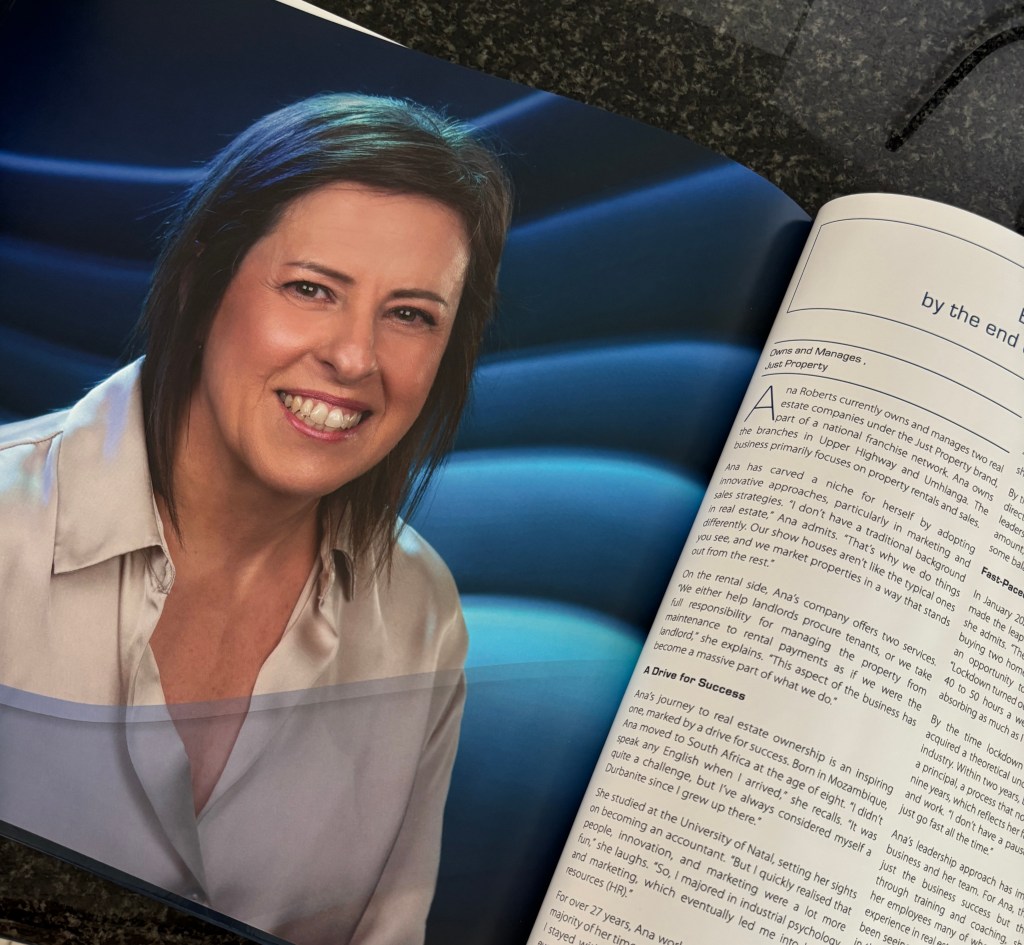
    Ana Roberts 2025

    For most of my career, I lived and breathed human resources.
    Hard work led to results, results led to recognition, and recognition led to promotion. I climbed steadily, earning a senior position in a corporate world that was familiar, structured, and, if I’m honest — comfortable. I stayed with one organisation due to loyalty and comfort.

    It wasn’t ideal, but it was known. And known feels safe.

    Then life did what it does best — it disrupted the plan. A curveball. Big one! Circumstances changed, and suddenly, comfort was no longer an option.

    At 50-plenty, I made a choice that terrified me: I left what I knew and stepped into real estate — an industry I had zero experience in. No track record. No handbook. Just a clear vision, strong values, and a fierce determination to figure it out.

    The Steep Learning Curve

    The learning curve wasn’t just steep — it was vertical. Every day demanded discipline, focus, and humility. I had to build credibility from scratch, learn legislation, processes, new systems, navigate new challenges, and adapt to a world where results were instant and visible. I was doing this from the front, not as an agent but as a franchise leader. I knew many people were waiting for me to fall.

    But with integrity, innovation, and excellence as my anchors, the impossible started becoming achievable. Slowly, a business began to grow — one built not just on numbers, but on people, purpose, and principle.

    The Power of Choice

    Change is uncomfortable. Sometimes it’s terrifying. There were moments I wanted to run back to what I knew — the safety of the familiar, the predictability of the old routine. But every time I looked back, I reminded myself: comfort is not the same as contentment.

    Today, I’m where I truly want to be — leading a business that reflects my values, surrounded by a team that shares my vision, and proving (mostly to myself) that it’s never too late to reinvent your path.

    The Curveball

    If you’re standing at the edge of change — take the leap.
    It will be scary. It will be messy. But it will also be extraordinary.

    Because sometimes the hardest choices carry the greatest rewards.

  • Why Businesses Must Embrace Change to Survive

    Why Businesses Must Embrace Change to Survive

    Because coffee is essential for survival, culture makes or breaks a business, and life… well, life always throws a few curveballs.

    Doing things the way they’ve always been done is comfortable. It’s familiar. It doesn’t ask too many questions, doesn’t demand too much effort, and lets everyone get on with their day without rocking the boat. It’s the business equivalent of ordering the same takeaway every Friday night — no surprises, no stress, and no chance of discovering something new.

    The current way is proven, right? It got you this far. And yes, it requires less effort than sitting down to rethink how things could be better. But here’s the thing: “the way it’s always been done” has one big problem. At some point, it stops working. Dinosaurs did things the same way for a very long time too… and we know how that ended.

    It’s easy to confuse “what worked yesterday” with “what will work tomorrow.” Businesses fall into this trap all the time. They perfect their systems, they polish their processes, and then they stop looking ahead. For a while, the results keep coming in, and everyone pats themselves on the back for sticking to the formula. But then the market shifts, technology evolves, customer expectations change — and suddenly the formula isn’t delivering. The dinosaur is still stomping around proudly, but the asteroid is already on the way.

    Courage

    Clinging to old ways feels safe. Innovation feels risky. It requires energy, creativity, and often investment. And sometimes it fails — which is terrifying for leaders who are trying to protect the business. But the bigger risk is not failing at innovation. The bigger risk is failing to innovate at all. Because in business, standing still is not neutral. Standing still is falling behind.

    The danger is subtle at first. Maybe you lose a deal to a competitor who’s adopted new technology. Maybe your once-loyal clients drift toward someone who offers a slicker, more modern service. Maybe your team feels frustrated because they can see the world moving on, but leadership won’t budge from “the way we’ve always done it.” Eventually, the gap grows too wide to ignore. And what used to be a strength — your consistency, your predictability — becomes a weakness.

    This is why leaders need to resist the comfort zone. A comfort zone is a great place to rest, but it’s a terrible place to build a business. Innovation doesn’t mean reinventing everything overnight. It means having the courage to ask uncomfortable questions. Is this process still working? Is there a smarter way to do this? Does this strategy prepare us for the next five years, or just get us through the next five months?

    And let’s be clear: not all traditions are bad. Some old ways survive because they really do work. But they only stay effective because someone, at some point, checked whether they still made sense. The key isn’t to throw everything out; the key is to keep testing what you’ve got against the world you’re operating in. A business that refuses to test its assumptions is a business that’s waiting for extinction.

    So yes, doing things the way you’ve always done them is easier. It’s the low-effort, low-risk option. But easy doesn’t build the future. Easy doesn’t differentiate you from competitors. Easy doesn’t inspire your team or excite your clients. Some leaders build teams around this and think they are doing a fabulous job. Easy is just… easy. And in business, easy almost always comes before irrelevant.

    The challenge

    The challenge for every leader is to balance the comfort of what works with the curiosity of what could work better. To resist the temptation of sitting in yesterday’s success and instead keep asking what tomorrow demands. Because in the end, the businesses that thrive are the ones that evolve. They adapt, they innovate, they embrace change. They don’t wait for the asteroid.

    The leadership lesson is simple: don’t be a dinosaur. Respect the past, but don’t live in it. Keep moving forward, even if it’s uncomfortable. Especially if it’s uncomfortable. Because discomfort is the sign that you’re growing, while comfort is the sign that you’ve stopped. And in business, once you’ve stopped, it’s only a matter of time before you’re nothing more than a fossil.