Category: Mindset & Personal Growth

Personal insights, framed for business impact

  • Leadership Traits That Inspire Others

    Unseen leaders

    Leadership isn’t about titles, corner offices, or how loudly you can speak in a meeting. It’s about who you are when no one’s watching — and how you show up for others when things get hard.

    As leaders, we’re not looking for perfection. We’re looking for potential — and the character that turns it into something remarkable.

    What We Do Look For

    We look for initiative — the person who doesn’t wait for a memo to tell them what’s obvious. They see what needs doing and just get on with it. Bonus points if they do it without sighing loudly first.

    We look for innovation — not the kind that involves writing “THINK OUTSIDE THE BOX” on a whiteboard, but the real kind — the one that finds new, better, smarter ways of doing things when the box is already on fire.

    And we look for independence — the person who quietly gets things done while everyone else is still forming a committee about it. The one who can be trusted to handle it, fix it, or find a way through it — all without a daily pep talk.

    Over and above this, they do an excellent job. They deliver unquestionable results in their area of expertise and others look up to them. They are an inspiration. A great example.

    They buy into the vision and live the values. They help others see the vision and live the values.

    These are the seeds of real leadership. They don’t always grow fast, but when they do, they change everything.

    What We Don’t Look For

    We don’t look for the team snitch — you know, the self-appointed “reporting channel” who mistakes gossip for initiative.
    If you spend more time narrating other people’s shortcomings than improving your own, spoiler alert: that’s not leadership.

    We don’t look for arrogance disguised as ambition. The “I’m not bossy, I just have better ideas than everyone” type. Confidence is great — but humility looks better on everyone.

    And we definitely don’t look for the person who steps on others to be seen. You can’t claim to be a leader when your team needs a first aid kit after every meeting.

    The Humble Kind of Leadership

    The best leaders are the ones who make others feel capable, valued, and seen. They don’t steal the spotlight; they share it. They celebrate the quiet wins, support their team through the storms, and never forget that leadership is a privilege — not a power play.

    True leadership is humble, human, and deeply supportive. It’s less about control and more about contribution.

    The Curveball

    If you want to lead, start by helping others succeed. Be the calm in the chaos, the voice of reason in the WhatsApp group, and the person who notices effort — not just errors.

    Because true leaders don’t create followers; they create more leaders. And if you can do that with a bit of humility, humour, and heart — you’re already halfway there.


  • From Cricket to Business: The Importance of Team Mindset

    Protea South Africa national Flower

    So close. The South African Women’s Cricket team — our incredible Proteas — made it all the way to the World Cup final. The skill? Undeniable. The discipline? Evident. The teamwork? Beautifully on display. They ticked every box on the “how to win” checklist.

    And yet… they didn’t.

    So what happened?

    Let’s unpack this over a cup of coffee.

    Skill, Discipline, Teamwork – and Belief

    To win anything — a match, a deal, or even just the week — you need a combination of skill, discipline, teamwork, and belief. The Proteas had the first three nailed. You don’t get to a World Cup final without mastering those.

    But belief — real, deep, goosebump-inducing belief — might have been the missing ingredient.

    Their captain said the team was focused on taking “one game at a time.” Sensible? Absolutely. But did you ever hear them say, “We’re bringing the cup home”? Not quite. Compare that to the Springboks — a team that somehow makes you believe they’ll pull off the impossible… even when they’re trailing by 10 points with two minutes to go.

    Is that belief a coaching thing? A mindset thing? A culture thing? Probably a bit of all three.

    Medals vs Mindset

    Here’s the hard truth: if you’re happy to get a medal — any medal — you’ll always lose. You might not even make the final. Winners don’t play for bronze or silver; they play to win.

    You have to want it so badly you can taste it — like candyfloss at a funfair, sweet and irresistible. That kind of hunger gives you the energy to dig deep, to stay in the nets when everyone else has gone home, to deliver exceptional results no matter what’s needed. That’s the difference between participating and owning the moment.

    When One Player Drops the Ball

    In any team — sports or workplace — the magic only works when everyone pitches up on the day. One person off their game can shift the whole dynamic. Two crucial dropped catches and a duck from a key player might have cost the Proteas that final.

    It’s not about blame — it’s reality. In the workplace, one “off day” from a key team member can derail a project, a pitch, or a deal. That’s why preparation, mindset, and mutual belief matter just as much as technical skill. The chain really is only as strong as its weakest link.

    Back in the Office

    So how does this play out in our world of coffee cups and client calls?

    • Skill is your knowledge and expertise. Keep learning, stay sharp.
    • Discipline is your daily grind — the calls you make, the reports you finish, the consistency that builds credibility.
    • Teamwork is what keeps the wheels turning when things get tough.
    • Belief is the secret sauce. The quiet confidence that says, “We’ve got this.”

    If your team believes — really believes — that they can hit their targets, close the deal, or turn a challenge into a win, magic happens.

    And if not? Well… sometimes, like the Proteas, you play a beautiful game and fall just short. But the lesson is never wasted — because next time, you walk onto that field (or into that boardroom) not just hoping to win, but knowing you can.

  • Why Adaptability is Key for Real Estate Success

    Why Adaptability is Key for Real Estate Success

    Every property practitioner knows the sweet satisfaction of a well-laid plan. You’ve got the listing, you’ve lined up the show day, you’ve got buyers scheduled, and maybe you’ve even planned where to grab your celebratory coffee after the offer to purchase is signed. Everything looks neat and organised — in theory.

    And then reality arrives.

    The buyer gets cold feet. The seller suddenly remembers their “uncle’s cousin’s neighbour” who might want to buy directly. The bond approval falls through. Or the printer jams ten minutes before you need the contract. (Yes, even technology enjoys curveballs.)

    A testing job

    This is where the job really tests you. Because in property, as in life, the plan almost never plays out exactly as expected. The real skill isn’t in creating the perfect plan; it’s in how you respond when that plan collides headfirst with reality.

    Think of your plan like a GPS. It’s brilliant for setting direction. But when there’s roadworks, traffic, or the odd protest march rerouting half the city, the GPS starts politely yelling “Recalculating” at you. Do you give up on getting to your destination? Of course not. You reroute. You still know where you’re going, but the way you get there changes. That’s what property practitioners do every single day.

    The mistake some make is clinging too tightly to the original plan. They push forward as if nothing has changed, even when everyone else can see the road is blocked. They insist “this was the strategy” instead of adapting. But in property, flexibility is survival. Resilience doesn’t mean bulldozing ahead; it means adjusting without losing sight of the bigger goal: closing the deal in a way that’s fair, ethical, and sustainable.

    Here’s the thing — when reality throws you a curveball, it’s not a sign your plan was bad. It’s just feedback. That buyer who vanished? Feedback that motivation wasn’t tested strongly enough. The deal that fell through on finance? Feedback that pre-qualifying could save you time. The seller who suddenly changed their mind? Feedback that expectations weren’t aligned at mandate stage. Reality isn’t your enemy; it’s your best (and often bluntest) teacher.

    And this is where culture counts. A practitioner working in a strong culture doesn’t panic when the plan unravels. They don’t throw ethics out the window chasing a quick replacement deal. They regroup, adapt, and lean on values that keep them steady. Culture is what helps you smile when you’re explaining — for the third time — why the leaking roof really should be fixed before show day. It’s what helps you reassure a nervous buyer when financing takes longer than expected. And sometimes, it’s what keeps you sane when your “sure thing” collapses the morning before transfer.

    Plans

    So yes, plan. Prepare. Build your strategies. But don’t mistake the plan for reality. In property, the plan is the guide — not the guarantee. What sets great practitioners apart is how they respond when reality throws its curveballs: calmly, ethically, and with enough flexibility to reroute without losing the deal (or their sanity).

    The takeaway? Don’t fear the collision between your plan and reality. Expect it. Because in property, reality always has a sense of humour. It’s your response that decides whether you strike out or hit the curveball straight out the park.

  • Why Humble Confidence Beats Loud Success

    Lighthouse in calm waters

    In a world that rewards noise, being quiet can feel like you’re being overlooked. Social feeds shout “Look at me!” louder than ever, and sometimes it feels like success only counts if it’s seen.

    But here’s the truth — real confidence doesn’t need a microphone.

    The Power of Quiet Confidence

    You don’t have to be the loudest voice in the room to be the most respected. Confidence isn’t about volume; it’s about knowledge and clarity.
    It’s knowing your worth without needing to announce it.

    Humble confidence walks in, delivers value, builds trust, and lets results do the talking. It’s not shy — it’s steady. It doesn’t chase validation — it earns admiration.

    The Trap of Loud Success

    The temptation to be seen is real — especially in real estate.
    Every listing, every deal, every milestone feels like it needs to be broadcast to prove you’re relevant.

    But loud doesn’t always mean lasting. Sometimes the agents who shine brightest on screen fade fastest in reality. We all know the saying, empty vessels make the most noise.

    The ones who endure are the ones who serve with quiet consistency — the ones who celebrate success without arrogance, and lift others even as they climb.

    The True Reflection of Excellence

    Humility isn’t weakness — it’s wisdom. It’s the discipline to stay grounded when the spotlight finds you, and gracious when it moves on.

    True professionals know that success isn’t a performance; it’s a pattern. You can be visible without being vain. You can be confident without being loud.

    Because real excellence doesn’t shout — it shows. Real excellence celebrates others and takes them on the journey.

    The Authentic Edge

    Authenticity is the heartbeat of humility. It’s not pretending to be less than you are — it’s being real about who you are. It’s knowing your strengths, owning your story, and never needing to fake the highlight reel.

    When you work or lead with authenticity, people feel it. They trust you faster, stay longer, and follow your lead — not because you’re loud, but because you’re real.

    The Curveball

    In an age obsessed with visibility, choose authenticity. Build your reputation on substance, not spectacle.

    Be kind. Be confident. Be humble. And let your results make the noise.

  • From Invisible to Influential: The Power of Personal Branding

    From Invisible to Influential: The Power of Personal Branding

    Brand in a crowd

    There’s a moment every agent faces — that quiet realisation that you are the brand. Not the company logo, not the colour palette, not even the tagline on your email signature. You.

    In real estate, trust isn’t built by corporate slogans. It’s built by faces, voices, and reputations that stand out in a crowded marketplace.

    The No-Name Trap

    We all start somewhere — open houses, cold calls, and borrowed credibility. But staying invisible in an industry built on relationships is a choice.

    When you sound like every other agent (“great service,” “dedicated,” “passionate about property”), you blend into the beige. You become beige wallpaper or a nice warm cup of tea. Forgettable. Replaceable.

    And let’s be honest — no one refers the wallpaper.

    Becoming the Brand

    Your brand is the story people tell when you’re not in the room.
    It’s the way you handle conflict, the tone of your emails, the quality of your listings, the consistency of your word.

    Building it doesn’t mean posting more selfies or slogans. It means:

    • Defining your values and differentiators
    • Knowing your strengths and leading with them.
    • Showing up consistently — online and offline.
    • Educating, not just advertising.
    • Investing in your presentation as seriously as your profession.

    The best agents aren’t loud — they’re clear. You immediately know what they stand for and who they serve.

    The Curveball

    You can work under a brand as this helps but become your own brand. Become the reason why people come back to you or refer you to others.

    When you treat your reputation like your most valuable listing, you start attracting business instead of chasing it.

    Because in real estate, the strongest currency isn’t commission — it’s credibility. Find an agency that supports this and helps you to shine in your difference rather than making you beige or green wallpaper.

  • The Hidden Costs of Staying in Your Comfort Zone

    The Hidden Costs of Staying in Your Comfort Zone

    Comfort zones are lovely places. They’re warm, familiar, and predictable. They feel safe. But do you know what else they are? Useless for growth. Comfort zones are like that soft couch you sink into after a long day — great for a nap, terrible for getting anything meaningful done.

    And here’s the leadership truth nobody really wants to hear: comfort zones don’t pay the bills. They don’t grow your business. They don’t inspire innovation. They don’t stretch your team. All they do is lull you into a false sense of security while the world outside keeps moving, changing, and leaving you behind.

    The tricky part is that comfort doesn’t look dangerous. In fact, it feels like success. When things are running smoothly, when the numbers look stable, when you’ve got a rhythm that works — that’s when the danger creeps in. You convince yourself you’ve “figured it out.” But the moment you stop stretching, you start shrinking. Markets don’t freeze just because you want to take it easy. Competitors don’t pause while you enjoy the status quo. The clients you serve today will expect more tomorrow. Comfort today leads to irrelevance tomorrow.

    Stepping into discomfort, on the other hand, is where the growth lives. Discomfort forces you to learn. It sharpens you, tests you, and makes you rethink assumptions. It might feel like chaos in the moment, but it’s also the spark that pushes businesses to adapt, leaders to innovate, and teams to stretch further than they thought possible. Discomfort is where you build muscles, while comfort zones are where those muscles slowly atrophy.

    Of course, nobody enjoys discomfort. Leaders don’t wake up in the morning saying, “Fantastic, I can’t wait to face something that terrifies me today.” But the leaders who grow know they can’t avoid it. They walk into it, even when their instinct says run. They understand that the uneasy conversation, the bold new strategy, the scary investment, or the risk of trying something new — those are the very things that keep a business alive and thriving.

    Think of every major leap forward you’ve ever made, personally or professionally. Did it come from being comfortable? Probably not. Comfort keeps you where you are. Growth drags you into new, sometimes awkward, sometimes sweaty-palmed territory. The comfort zone whispers, “Stay here, it’s fine.” Discomfort says, “Step out, it’s risky.” And progress lives on the side of discomfort every single time.

    Leaders who cling to their comfort zones risk becoming fossils in their own businesses. It’s not that they lack skill or intelligence — it’s that they stopped moving. And if you stop moving, the world doesn’t wait for you to catch up. The asteroid doesn’t send a calendar invite. Suddenly, you’re a dinosaur wondering how everything changed so quickly.

    Here’s the other problem: when leaders stay in their comfort zones, their teams do too. People follow the example that’s set for them. If they see leadership avoiding tough calls, dodging risk, or rejecting change, they’ll copy that behaviour. Culture settles into complacency. Innovation stalls. And then leaders start asking, “Why is nobody stepping up?” The answer is simple: because you didn’t.

    Stepping into discomfort doesn’t mean reckless risk-taking. It doesn’t mean throwing everything you’ve built out the window. It means intentionally pushing into spaces that feel challenging. It’s saying yes to growth when no feels safer. It’s setting stretch goals that make the team nervous, but excited. It’s trying new strategies before the old ones stop working. It’s listening to new voices, even when you’re sure you’ve got the answers.

    In practical terms, this could look like:

    • Launching that new service line before you feel “ready.”
    • Hiring for potential and cultural alignment, even if the CV isn’t the most polished.
    • Having the tough conversation with the team member who’s dragging the culture down.
    • Adopting new technology while competitors are still arguing about it.
    • Saying no to a client who doesn’t fit your values, even if it means short-term loss.

    Each of these decisions is uncomfortable. None of them come wrapped in certainty. But each one creates growth. And the cumulative effect of those decisions is what separates businesses that survive from those that thrive.

    The truth is, comfort zones are expensive. They cost opportunities. They cost innovation. They cost momentum. And eventually, they cost relevance. Leaders who wait until discomfort is forced on them often find they’re already behind. Leaders who choose discomfort — who step into it intentionally — are the ones who stay ahead.

    So the next time you feel that knot in your stomach before a decision, pay attention. That’s not always a warning sign. Sometimes it’s the indicator you’re exactly where you should be. Because the place where you feel stretched, where you feel slightly unprepared, where you’re not entirely sure of the outcome — that’s the place where growth happens.

    And if you’re still wondering whether stepping into discomfort is worth it, just remember: comfort zones don’t pay the bills. They never have. They never will.

    So step out. Stretch. Take the risk. Have the hard conversation. Try the new idea. Because the cost of staying comfortable is far higher than the cost of being uncomfortable.

    And besides — nobody ever built an extraordinary business by staying cosy on the couch.

  • Transform Your Real Estate Career: Step Out of Comfort

    Transform Your Real Estate Career: Step Out of Comfort

    Look into the future and be awesome.

    Average is safe. It’s predictable, familiar, and comfortably forgettable.

    And comfort is seductive — it whispers, “Stay here, it’s fine.”
    But the truth? Comfort doesn’t create change. It just keeps you still.

    In South Africa, 10% of all new real estate professionals quit, 87% survive, with only 3% thriving. To thrive, you need to be awesome! What does that take?

    The Trap of Comfortable Average

    It’s easy to be average. You won’t offend anyone. You won’t fail spectacularly. You won’t stretch too far or sweat too much.

    But you also won’t grow. Because growth and comfort never coexist. Growth requires hard work.

    Standing out is uncomfortable. It means trying new ideas, risking rejection, and sometimes walking alone while others stay huddled in the middle. Peers very often reject you because you stand out. As soon as you succeed, they will follow you so do not stress.
    But that’s where greatness begins — on the edge of what feels awkward and new.

    The Power of Little Steps

    You don’t have to leap off the edge from average to awesome overnight. Don’t jump off the cliff. You just need to move — consistently, intentionally, one small step at a time as this will lead to success. Consistency is the key.

    • Try a fresh approach to your next listing.
    • Learn something new about your market today.
    • Warm call everyday
    • Be disciplined
    • Call a client you’ve been avoiding.
    • Ask for feedback.
    • Say yes to something that scares you a little.

    It’s amazing how much momentum a few daily discomforts can create. It takes 21 days to create a new habit so keep going. Try something new and keep at it. What do you want more, average or success?

    The Awesome Mindset

    Awesome isn’t about being the loudest or most confident person in the room — it’s about being the one who cares enough to improve.
    It’s showing up fully, thinking creatively, and giving people a reason to remember you.

    Average will keep you afloat.
    Awesome will take you places.

    The Curveball

    So here’s the challenge: step out of that comfort zone — just once a day. Send the message. Ask the question. Try the idea.

    Because nothing extraordinary ever came from staying comfortable.

    You don’t need to be perfect. You just need to be disciplined and brave — daily.

  • Overcoming Fear: My Leap into Real Estate at 50

    Overcoming Fear: My Leap into Real Estate at 50

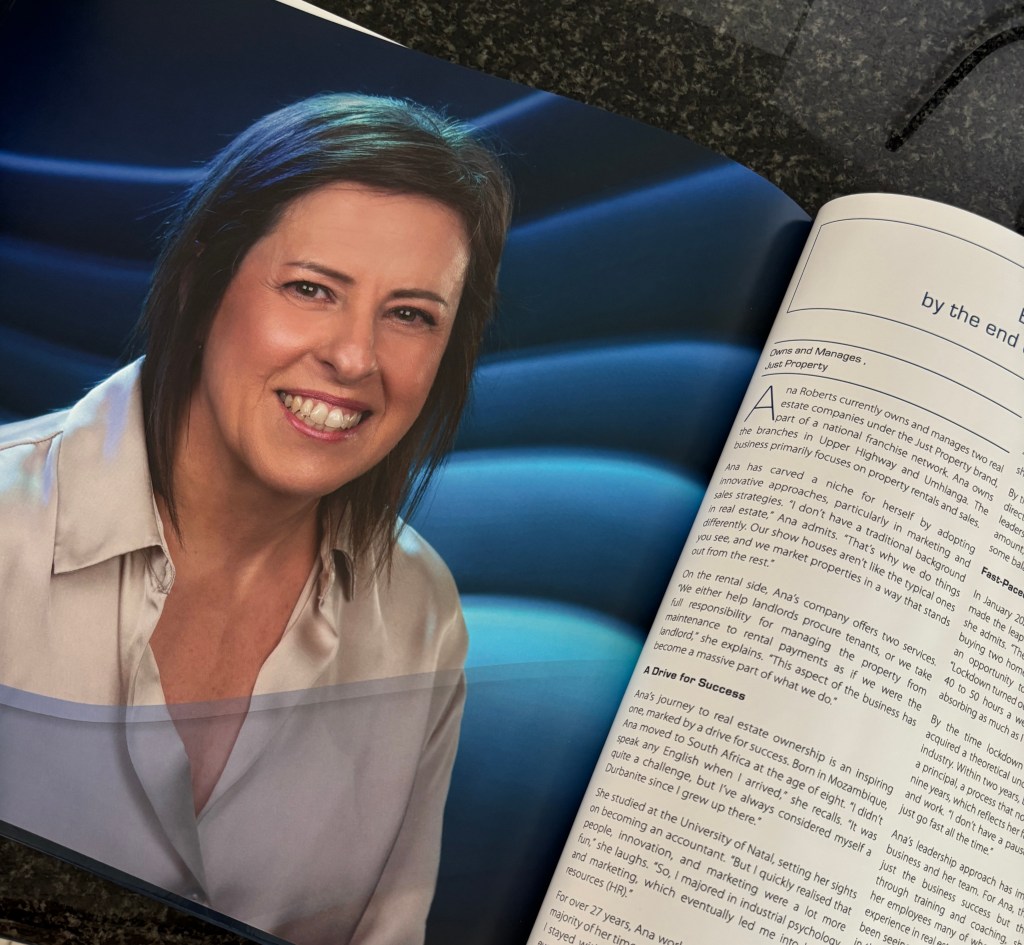
    Ana Roberts 2025

    For most of my career, I lived and breathed human resources.
    Hard work led to results, results led to recognition, and recognition led to promotion. I climbed steadily, earning a senior position in a corporate world that was familiar, structured, and, if I’m honest — comfortable. I stayed with one organisation due to loyalty and comfort.

    It wasn’t ideal, but it was known. And known feels safe.

    Then life did what it does best — it disrupted the plan. A curveball. Big one! Circumstances changed, and suddenly, comfort was no longer an option.

    At 50-plenty, I made a choice that terrified me: I left what I knew and stepped into real estate — an industry I had zero experience in. No track record. No handbook. Just a clear vision, strong values, and a fierce determination to figure it out.

    The Steep Learning Curve

    The learning curve wasn’t just steep — it was vertical. Every day demanded discipline, focus, and humility. I had to build credibility from scratch, learn legislation, processes, new systems, navigate new challenges, and adapt to a world where results were instant and visible. I was doing this from the front, not as an agent but as a franchise leader. I knew many people were waiting for me to fall.

    But with integrity, innovation, and excellence as my anchors, the impossible started becoming achievable. Slowly, a business began to grow — one built not just on numbers, but on people, purpose, and principle.

    The Power of Choice

    Change is uncomfortable. Sometimes it’s terrifying. There were moments I wanted to run back to what I knew — the safety of the familiar, the predictability of the old routine. But every time I looked back, I reminded myself: comfort is not the same as contentment.

    Today, I’m where I truly want to be — leading a business that reflects my values, surrounded by a team that shares my vision, and proving (mostly to myself) that it’s never too late to reinvent your path.

    The Curveball

    If you’re standing at the edge of change — take the leap.
    It will be scary. It will be messy. But it will also be extraordinary.

    Because sometimes the hardest choices carry the greatest rewards.